Tag Archive :volunteering

We held our first Volunteer Forum recently. We invited all our volunteers to attend as well as guest speakers from The Samaritans, LILY and Elements at the Manor. The Forum was held in the Parish Council Rooms in South Wootton as this was deemed to be a mid-point for all our volunteers.

The thinking behind holding the Forum was to find out from our volunteers if the support and training we give them enabled them to feel confident when providing our befriending service. The guest speakers pitched their talks to give advice on how our volunteers can provide the best quality of support to their client.

The Samaritans explained about the importance of “open” questions. This involves phrasing questions to the clients in a way that would need more than a yes or no answer and are useful for encouraging someone to express their thoughts and feelings. For example, instead of “Are you feeling well today” this could be phrased as “How are you feeling today?”. Using words such as “what”, “when”, “where” and “how” can encourage a client to be more open. They also showed us how to look for signs of how a client is feeling from their body language  and to use this in influencing the questions we ask.

Jill and Eilish from King’s Lynn Samaritans explaining the importance of “open” questions

Rebekah from LILY explained how LILY works in conjunction with the local council, WNB and other organisations. She explained that their website is a hub for local communities to find out about agencies and organisations who advertise their services and events. She talked about the changes they had implemented during Covid and how their aim is to reduce social isolation in all age groups.

Rebekah from LILY talking about the services they can provide.

Annette, owner of Elements at the Manor gave a talk on the importance of maintaining self-care and wellbeing. She described how it is essential for our volunteers to take time for themselves, to stay hydrated and to eat a balanced diet. She explained that if you look after yourself properly then you are more able to look after someone else better. She also showed us some simple exercises to help keep joints mobile and to reduce stress within our bodies. These exercises could be done in an armchair and would be suitable to be shown to our clients.

Annette from Elements At The Manor demonstrating some simple armchair exercises.

After the talks there was an opportunity to have discussions. Each table had a lead person who prompted questions that we designed to find out why our volunteers chose to work with WNB, whether they felt their training met their needs and expectations and what WNB could do to improve the support and advice that we give to them. There was some very interesting discussions and feedback which on the whole was very positive to read.

Volunteers during our round table discussions
Making notes on the event for our feedback forms

We ended the session with a delicious lunch provided by The Filling Station. The conversations continued and it was lovely to hear the chatter and buzz from everyone. The general opinion on the event was that everyone had enjoyed it and appreciated the time to be able to give some feedback.

A delicious lunch after all the talk and hard work!

We finished off our review by sending out an anonymous survey. We had a good response and the findings showed:

  • Over 60% of participants prefer to learn in small groups and talking to other volunteers was the next most popular choice. A few prefer to learn on their own or by reading. E-learning was an option no one selected
  • Our face to face volunteer meetings are at a time or on a day 75% of participants can’t make.
  • 43% of respondents regularly come to face to face volunteer meetings and 26% occasionally come along, while 21% have never done so.
  • 43% of participants have never joined a Zoom volunteer meeting, while 21% regularly do and 26% do occasionally.
  • 67% of respondents say the Zoom meetings are on a day or time you can’t make, and 25% say you can’t use Zoom
  • 100% of participants say our volunteer mailouts are useful! Volunteers enjoy being kept up to date, and the mailouts help them to feel part of the volunteer team. Adding some real life stories might be a worthwhile addition.
  • Most of the volunteers who replied, nearly 44%, have volunteered with us for 1-5 years. 26% have volunteered 5-10 years and nearly 9% over 10 years.

The comments told us that it’s hard for many of our volunteers to find the time to come to a face to face meeting, however that for people who are able to attend its helpful to meet other volunteers and talk.

Zoom is something many of them don’t feel comfortable with or would need help to learn about and this puts them off.

Volunteers said that they enjoy giving back to the community and making a difference, that they enjoy meeting clients and they feel a sense of purpose about what they do. Volunteers were also very complimentary about the organisation.

If you would like to see the full results of the survey please drop us an email at info@wnbefriending.org.uk

Due to the Forum being such a success WNB are hoping this will become an annual event. This will enable us to keep evolving not just our services but the training and support we give to the volunteers who carry out the service.

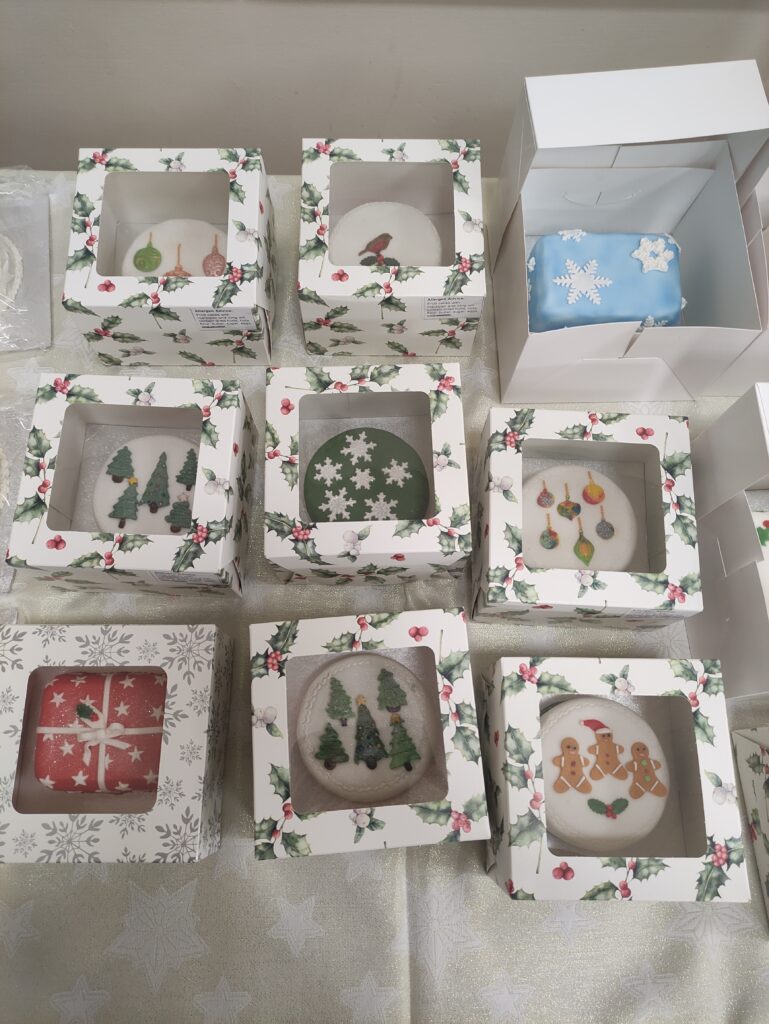
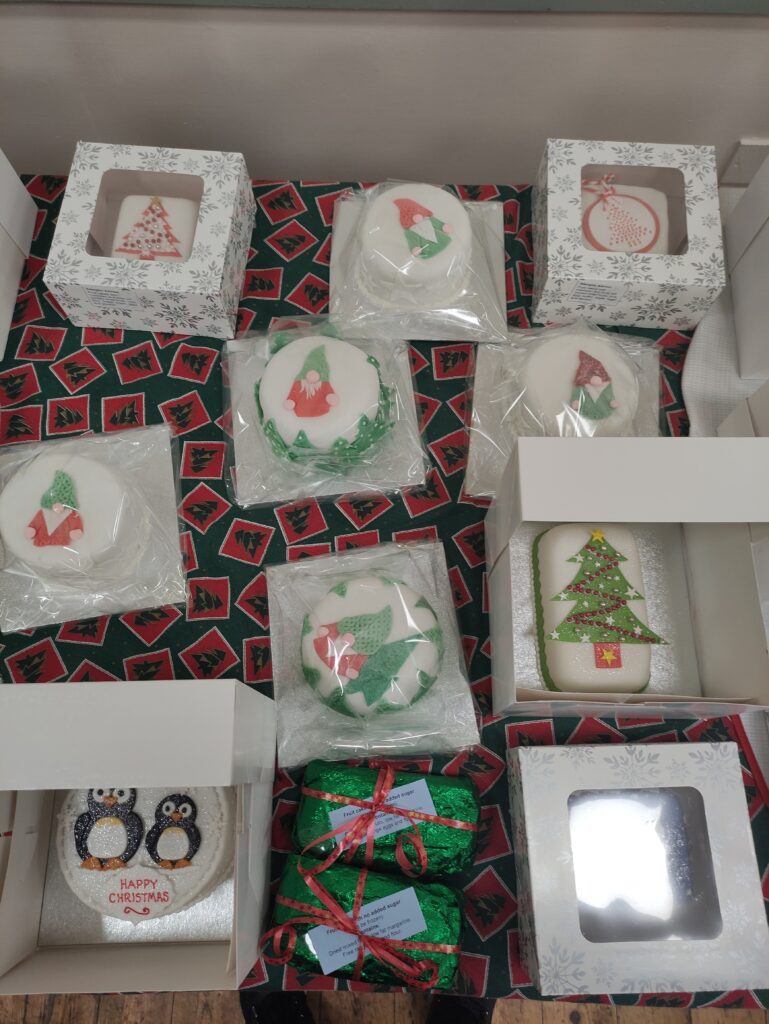
We did our annual visit to the lovely ladies of King’s Lynn Sugar Club. Once again they had lovingly made and decorated over 60 individual Christmas Cakes which they then donated to us to deliver to our clients. This beautiful gesture means a lot to our clients – this can sometimes be the only gift they receive at this time of year and goes a little way of passing on a bit of seasonal cheer.


We then held our Volunteer Christmas lunch which is a lovely chance to sit and catch up with some our amazing team of volunteers and share some food. We always have such a great time and it can get quite noisy with all the chatter and laughing. Our volunteers then take away the Christmas cakes to give to their client.

We are seeking a new Treasurer to join our Board of Trustees to help oversee and guide everything that West Norfolk Befriending does.

The Treasurer plays a major role in terms of organisational decision-making and developments.

Whilst experience of managing budgets and analysing financial data is not essential it would be helpful in the role of Treasurer.

Please download the role description for full details and instructions of how to apply.

We will be celebrating Befriending Week 1-7 November and will be thanking all of our invaluable volunteer befrienders who give up a little of their time every fortnight to make a difference to the life of a socially isolated, elderly person. Befriending can make a real difference to the life of both our clients and our volunteers and the feedback we receive proves this. We are always happy to receive applications for new befrienders and in times like these, where donating financially isn’t always an option, donating the gift of time can be just as important.

This week it is volunteers week and an opportunity for us to say thankyou to our volunteers. Without our volunteers we wouldn’t be able to reduce the social isolation felt by older people in West Norfolk. This year has been a bit different…

  • Our volunteers have embraced telephone befriending.
  • Our admin volunteers have typed letters at home.
  • We’ve had fun and learnt new things in our zoom volunteer meetings.
  • New volunteers have joined us!
  • We now have volunteers who live in Wales and Suffolk.
  • It is now easier for people with jobs to volunteer with us. We partnered with Power Networks, have a volunteer who works at RAF Marham plus other volunteers making their phone calls in their lunch breaks.
  • We needed more male befrienders and thanks to social media we found them!
  • Our board of Trustees have also embraced zoom meetings and we found a new Treasurer via twitter.

If you’d like to find out more about volunteering with us, please get in touch.

West Norfolk Befriending have teamed up with the UK’s biggest electricity distributor to match the company’s trained volunteers with older people who may be feeling isolated by COVID-19.

Key workers at UK Power Networks have partnered with charities to launch a telephone befriending service aimed at tackling social isolation during the coronavirus pandemic. UK Power Networks befrienders will phone them regularly during work time through the company’s Donate a Day scheme, which gives over 6,000 employees two paid days annually to volunteer.

Pippa May, chief executive of West Norfolk Befriending, said: “We are a tiny charity facing increasing demand for our services so it’s incredibly exciting to work with UK Power Networks to transform the service we offer and reduce social isolation at this difficult time.

“On average we work with frail people in their nineties who may have outlived family and friends or don’t have family nearby. They are often housebound, so isolation is always there, but increased by lockdown because the few visitors they had, such as hairdressers, can’t come anymore.

“It makes a real difference to their quality of life having someone to chat with, who has time to listen. Any family they do have may be carers, but a befriender listens to them. My hope is that at the end of this lockdown the community continues coming together to tackle isolation. It doesn’t have to cost anything.”

Each volunteer is background checked to safeguard people. A priority for UK Power Networks during the pandemic is taking extra care of people in vulnerable households in the rare event of a power cut. Some 1.87 million eligible households have signed its Priority Services Register for the extra services the company provides in such emergencies, up 6% in the last year.

Kerry Potter, consumer vulnerability manager at UK Power Networks, said: “We are excited to work with our existing charity partners to provide additional support at a time when their resources are stretched and more people are contacting them hoping to form a social connection at a time when connections are much more difficult to establish.

“These charities are providing an invaluable service to customers in our highest risk groups who would be eligible to join our Priority Services Register and typically may be struggling with their energy bills. People who have been shielding during the coronavirus outbreak will have an increased awareness of how their mental health is affected by social isolation.”

The Priority Services Register provides free extra help during power cuts for pensioners, families with young children and people with special needs, disabilities or health conditions. For details visit www.ukpowernetworks.co.uk/priority, call 0800 169 9970, or email psr@ukpowernetworks.co.uk.

Romina Arefin, graduate innovation engineer at UK Power Networks, who is coordinating the company’s befriending service and taking part in the programme.

We were delighted to welcome Jennifer, UK Power Networks’ training support assistant, to our befrienders team. She’s written about her experience with us here:

Reaching out to people who are feeling vulnerable and alone has never been more important. So when my manager invited me to take part in UK Power Networks’ confidential new telephone befriending scheme, Donate by Dialling, I readily agreed to be connected with someone in need of kindness and friendship over the telephone at this difficult time.

Last week, following training and interviews, I was matched by a small charity, West Norfolk Befriending, with someone who wanted a friendly ear and to chat, something we may take for granted, but which others sadly lack.

I was born in Africa and moved across three continents before the age of nine, which gave me a lot of life experience. I have gained compassion, understanding and tolerance and have developed those qualities as I’ve got older.

My manager approached me as someone who she felt has the skills to take on this important role of supporting a vulnerable person in their home. It felt good to know that people felt I had right qualities to make a difference.

I have volunteered in different ways throughout my life. To volunteer is to give back. It’s really personal and quite subjective. We are all passing through this life and I believe that when we give something, we get something back ten-fold. It’s like a miracle happening, like an angel coming, just when you needed it.

West Norfolk Befriending is a really supportive charity which understands their customers’ needs and creates a supportive environment. I had two interviews before being matched with a person who has similar interests to me. We have family in the same areas. She has a dependent and is a carer for that person and I have an elderly mother and am a carer for her. We both enjoy gardening and the allotment.

We haven’t talked about those things yet and I spent our first call listening. She is chatty and my call gave her an opportunity to let it all out. It’s another outlet now for her. Before calling I find that meditating, for even five minutes, frees my mind so that I give her my full attention. I hope that my calls give her friendship, somewhere to park some of her anxieties and frustrations and know she has a friend at the other end of the phone to listen. She will know that I will call her regularly.

If you’re interested in volunteering with us, find out more and get in touch with us here.

Volunteers Week takes place every year 1 – 7 June and it’s an opportunity to celebrate and say thankyou to volunteers across the UK. We have a fantastic team of volunteers doing everything from administration to helping with events, helping with our website and of course befriending. This post celebrates the work that our wonderful volunteers do – with words from them telling us why they love volunteering and the impact that their befriending has on their clients. Our volunteers visit clients in their own homes and Care Homes through the Care Home Connectors project. Now, during the Coronavirus pandemic, our volunteers are taking telephone befriending in their stride – continuing to make a massive difference for socially isolated older people in West Norfolk. Get in touch with us here if you’re interested in finding out more about volunteering with us.

One of the nicest things about Befriending is to make the client laugh. My current client says she wishes I could stay forever.

Our befrienders make a massive difference to their client’s lives, wellbeing and happiness – plus volunteering is rewarding for them aswell!

My client’s face lit up with delight when I took him to the seaside. He hadn’t been for two years since his illness.

Our volunteers ease isolation not only by bringing the outside in but also by taking clients out when possible. With a good match and a trusting relationship with their volunteer, our clients enjoy trips to the seaside, cafes and garden centres – plus to our social events where clients get to meet other volunteers, staff and clients.
“It is a privilege to be accepted by clients and trusted enough for them to talk to me. I love to see the difference over time that my visits make to the client, how they open up and readily take part in conversations.

It took a little while for my client to remember how to crochet but we managed to do some.

Our volunteers often spend time with their clients encouraging their hobbies and interests. Whether that’s crochet, reading or gardening our volunteers help to brighten our clients lives long after their visit.

The people running West Norfolk Befriending are warm and passionate, the clients appreciative and lonely. I now have clients who are friends and thoroughly enjoy the friendship of other Befrienders and the joy I bring to lonely clients.

Our clients all have such wonderful stories to tell and for most of them they have no-one who has the time to listen – that’s where we come in. My clients have had such varied careers such as coal miner, milliner, member of concert party in the war, one who travelled all over the world while she worked with British Airways and another who worked with the Bank of Australia in Melbourne. I have learnt a lot from our talks and have enjoyed the visits as much as the client.

Our wonderful volunteers give an amazing 3036 hours a year to listen to our clients stories.

I think befriending says it all; we provide social contact for people who live alone, we provide a listening ear and our time. This is why I am proud to be a volunteer for West Norfolk Befriending.

It’s so lovely to hear that our volunteers are proud to be a West Norfolk Befriending volunteer! We are very proud of our volunteers and the brilliant work that they do.

We were excited to feature on BBC Radio Norfolk last week as part of its special series of broadcasts to launch its Volunteer of the Year awards. The show invited us to talk about how and why we work with volunteers, and gave us the opportunity to unveil our new Care Home Connectors project.

Hear from Chief Executive Pippa about what we do, and from our new member of staff Amanda, who talks about Care Home Connectors.

Our volunteers breathe life into the organisation, helping us to help vulnerable clients and provide a lifeline to them through their isolation. We’ve been working with the community for the past 15 years and always welcome new volunteers, whether it’s offering our core service as Befrienders or providing other much-valued skills.

You can find the show here, and go straight to our slot in the show at 01:26:00.

I’ve been a Befriender for six months now and the time has flown by. Visiting an isolated older person in their home is rewarding and positive. Here are five things I’ve learnt from the Befriending experience.

1. Volunteering helps volunteers, too!

It’s not just the people you’re supporting who benefit from you giving your free time. It’s hugely rewarding for you, too. Benefits include a sense of fulfilment, uplifted spirits and a way of meeting new people. It can really boost your confidence to know that you are helping someone and doing that little bit to improve their life. Every time I visit my client, I feel the positive impact of having brightened up someone else’s day. It’s been scientifically proven that doing good deeds can help with our mood, too. Not to mention getting to know other volunteers at our monthly meetings – they are a lovely bunch and have a wealth of experience to share.

2. New skills

I’ve attended several training sessions during my time here so far, on subjects as wide-ranging as confidentiality and fire safety. I have even honed my skills in website design, having rebuilt this very site on a voluntary basis. Volunteering for a small charity means there could be more opportunities to get involved and use or develop your skills. It’s always worth asking.

3. Greater awareness of the past

It’s the little things we take for granted, like being able to run the washing machine and looking everything up on the Internet, or buying off-the-rack clothes – the older generation can bring to life what it was like before all these conveniences! In our Sharing Stories project, we loved hearing about everyday life and learning about the fascinating lives our clients have led. We’ll be updating you on this wonderful project soon, so watch this space.

4. An insight into how other people think

Befriending often brings together two people who might never have met under normal circumstances. This makes it a lovely opportunity to get to know other views on life and understand other people better. Always a great asset in any social situation.

5. It’s the simple things that make a difference

Visiting someone once every fortnight might not seem like much – but that regular, reliable contact, that talk shared over a hot cup of tea, could make all the difference to them. According to the Health Foundation, “one in three older people in the UK live alone”. This is true for many of our clients. Sometimes they might not have seen anyone for several days, so being able to chat with you really can make their day.

These are some of my own experiences as a Befriender, but I’d love to hear yours – what’s your most memorable moment? What have you learnt?

Remember not to use any names to keep peoples’ identities private.

If you’re ready to apply for a Befriender role, click here.